Tuesday, 23 February 2016

Body of Work: Assignment 3 First Thoughts.

As most of my images for assignment 2 were postcard picturesque I was keen to balance this with some less picturesque shots.  Whilst photographing and researching the River Witham for assignment 2 I was reminded of the fact that there is an unusual concentration of abbeys in the Witham Valley.  It is thought that the reason for this is fourfold.  Firstly the medieval monks may have retained through myth and memory the knowledge that the Iron Age Celts regarded the Witham as a sacred river. Secondly the abbeys were close to the river which was already an important transport link between Lincoln and the sea at Boston and also close to the Limewoods from which they earned a livelihood. Finally all these abbeys were in sight of the mother house of Lincoln Cathedral.  For this assignment I decided to walk from the cathedral along the Viking Way long distance footpath to my childhood home in the village of Woodhall spa visiting all of the abbeys on the east bank on the way.  As I walked I couldn't help but wonder if medieval pilgrims had also travelled this route.


Why walk, apart from the fact that I enjoy walking and people in medieval times and the Middle Ages may well have travelled between the abbeys and Lincoln on foot?  Liz Wells (2011) reminds us that in the early years of photography, the photographer would travel on foot to reach his desired location, but during the second half of the 20th century and into the 21st car ownership has become widespread, rail travel is faster and we have cheap air travel.  Travel has become associated with speed of access.  She argues that walking is different, with a slower pace and an increased experience of the environment.  Walking, she points out, is a reflective experience and all of the senses are brought to bear.  She suggests that walking is a whole body experience and integrates the sensual and the cerebral.  Walking is also sequential.  Also in favour of walking is Anna Pavord (2016) who argues that speed diminishes the gifts that a journey can give such as moving through a landscape slowly in order to be able to watch it and take in its characteristics.  She suggests that she wants to slow down the whole process and stay in touch with moving over the landscape. Pavord (2016) also quotes William Cobbett who reported to the Board of Agriculture in 1821 and said that a coach goes too quickly and you can see nothing; he actually rode, stating that on foot "the fatigue was too great!"  For these reasons, as well as a natural enjoyment of the process, both in my native Lincolnshire and in mountain environments, I decided to complete this assignment by walking, recording what I saw during my perambulations.


I have looked at four photographer artists while researching this part of my body of work: Richard Long, Hamish Fulton and Paul Gaffney and and Chris Friel. Links to the relevant blogs are indicated.  All four base their work on walking. Richard Long began his work by photographing his walks, often the 'footpath' that he had created by walking back and forth along it. Some of my images of actual paths were taken because of that inspiration.  Long has since expanded his work to include sculpture both in the land, which he photographs, and in the studio/gallery and also the use of text.  Unlike Long who alters the landscapes he passes through, Fulton treads softly and leaves no indication of his passing.  Like Long, however, Fulton began with photography, but gradually text has taken over more and more.  His aim was to engage with the land and nature and he feels that walking is a meditative experience.  He says that a walk has a life of its own and does not need to be materialized into an artwork.  He also says that an artwork may be purchased but a walk cannot be sold.  Unlike Richard Long and Hamish Fulton, contemporary photographer Paul Gaffney still relies totally on his photography.  In fact, he chooses not to add text to his images as he feels that it would distract the viewer from the photograph and he argues that lack of caption adds mystery to the pictures.  He agrees with Hamish Fulton, though, in that he believes fervently that walking is a meditative experience and part of his PhD work is to develop a process of photography which will help other photographers to combine art and meditation.

Another photographer studied is Chris Friel who makes inspirational ICM images.  In an interview by Tim Parkin (2010) he says that one consistent theme in his technique is walking long distances.


Like both Hamish Fulton and Paul Gaffney I have long found walking (and running) to be a meditative experience, especially in mountain landscapes.  When walking in mountains, especially when on my own, I have a very strong sensation that I never want to come down.  Walking is very definitely a very special experience and while taking the photographs for this part of my body of work it enabled me to meditate on the memories and myths of past ages that the land and people hold as Simon Schama describes in his book Landscape and Memory.

References and Bibliography


Bowditch, T and Rochowski, N. (2016) Paul Gaffney Global Archive Photography Available from: http://globalarchivephotography.com/project/paul-gaffney/  [Accessed 23.2.16]


Deakin, R. (2007) Wildwood, A Journey Through Trees 2nd Edition London Penguin Books Ltd

Fulton, H. (1991) Wind Through the Pines [photograph] [online image] Tate. Available from: http://www.tate.org.uk/art/images/work/P/P77/P77621_10.jpg [Accessed 23.2.16]

Fulton,H. An Object Cannot Be Complete Without an Experience [colour photograph] [online image] Available from: http://www.clarkgoldsberry.com/uploads/7/4/3/0/7430824/3391149_orig.jpg [Accessed 23.2.16]


Gaffney, P. 92016) Paul Gaffney [online] Available from: http://www.paulgaffneyphotography.com/About [Accessed 23.2.16]

Long, R. (1967) A Line Made By Walking [photograph] [online image] Tate. Available from: http://www.tate.org.uk/art/artworks/long-a-line-made-by-walking-ar00142 [Accessed 23.2.16]

MacFarlane, R. (2013) The Old Ways: A Journey on Foot. London. Penguin


Padley, G. (2013) We Make the Path by Walking by Paul Gaffney. British Journal of Photography [online]. Available from: http://www.bjp-online.com/2013/11/we-make-the-path-by-walking-by-paul-gaffney-book-review/ [Accessed 23.2.16]


Parkin, T. (2010) Chris Friel On Landscape [online] Available from: https://www.onlandscape.co.uk/2010/12/featured-photographer-chris-friel/ Accessed [10.2.16]

Pavord.A. (2016) Landskipping: Painters, Ploughmen and Places. London. Bloomsbury 

Turner Contemporary (2012) Hamish Fulton: Walk  [online] Available from: https://www.turnercontemporary.org/media/documents/Hamish-Fulton-background-resource.pdf [Accessed 21.02.16]

Schama, S. (1995) Landscape and Memory London, Harper Collins

Shepherd, N. 2011. The Living Mountain London, Canongate Books

Wells, L. (2011) Land Matters: Landscape Photography, Culture and Identity. London, I.B.Tauris
bbb


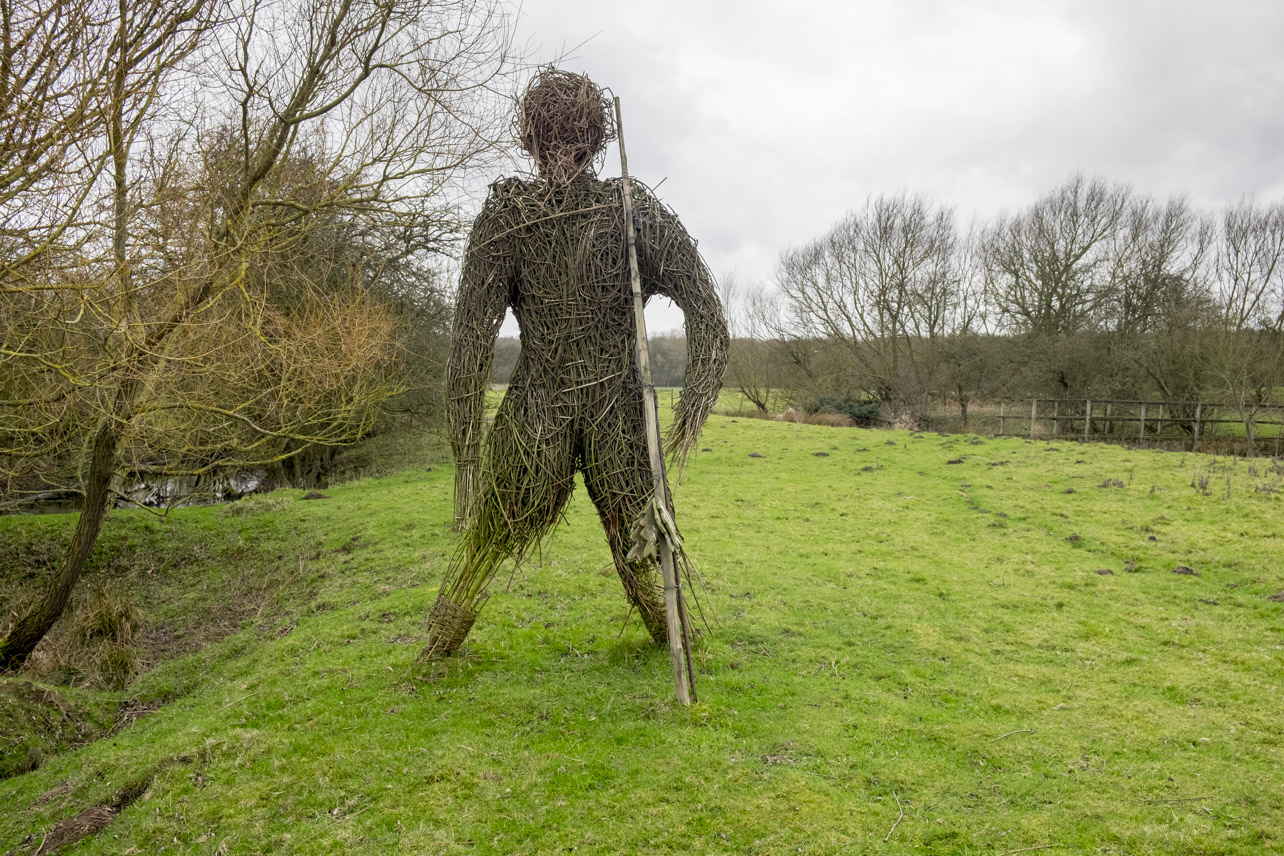


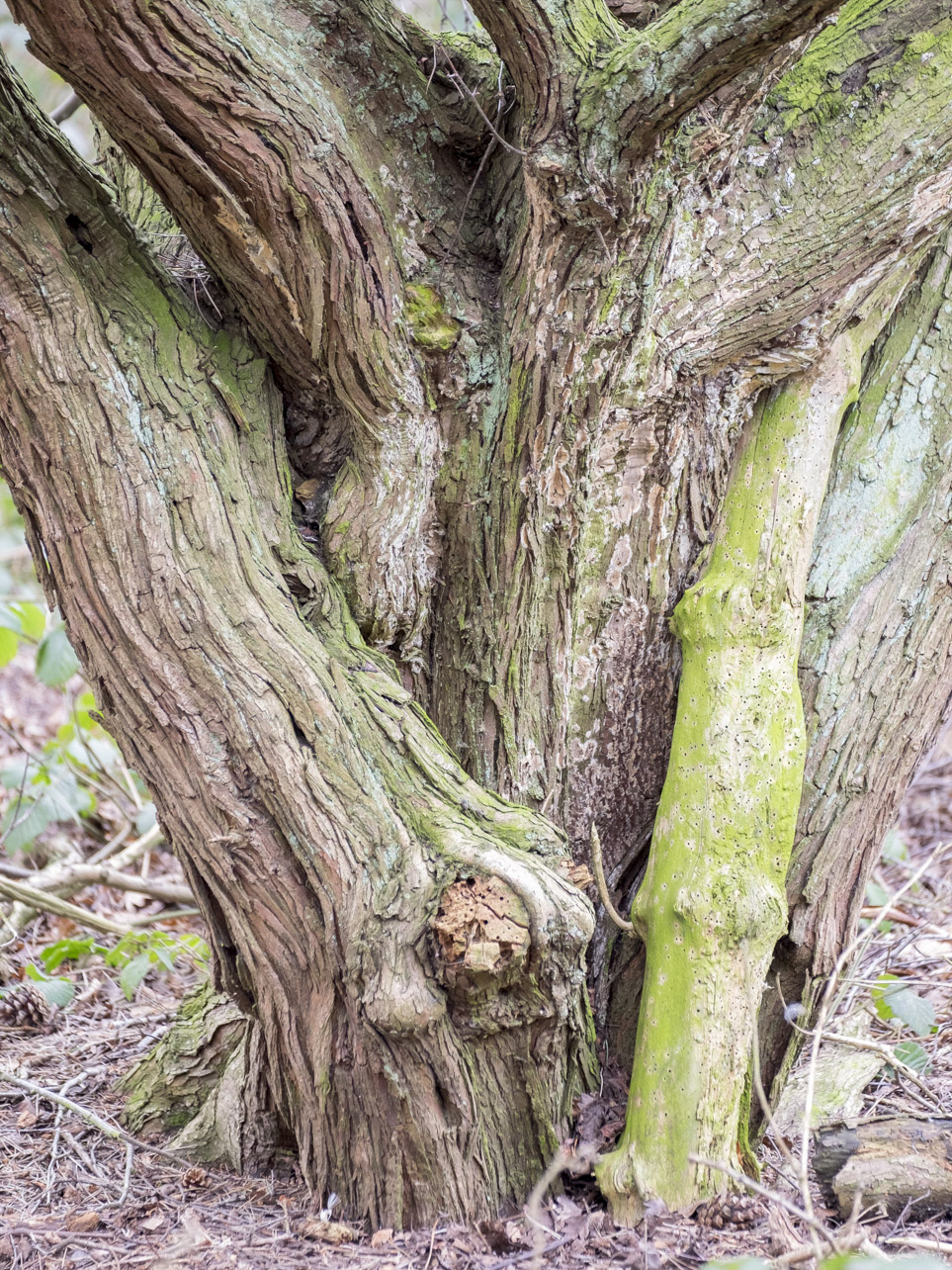


Paul Gaffney

Paul Gaffney

Paul Gaffney is a Dublin-based photographer who is currently working for a practice-based PhD at the University of Ulster in Belfast.  Like Hamish Fulton and Richard Long, his work is based on walking.  He likes to create images which are quiet and meditative and evoke the experience of being immersed in nature and to capture the essence of the journey (Global Archive Photography, 2015).  His first, self-published book, We Make the Path by Walking is based on a 3500 km walk through Spain, Portugal and France over a year in 2012 and explores the idea of walking as a form of meditation and personal transformation (Global Archive Photography, 2015).  This approach is something I empathise with as I find walking (and running) a meditative process especially when walking through high mountains.  Gemma Padley (Padley, 2013) in The British Journal of Photography tells us that, although his images are minimalist and feature no people, it is a testimony to his skill that they command attention.  She says that, while providing intimate detail, they still manage to give an overview of the whole scene and make the viewer feel that they are in it themselves.  In an interview by Bowditch and Rochowski for Global Archive Photography Paul Gaffney says that walking is a slow and rhythmical process that allows the mind to slow down and allows us to connect with our surroundings in new ways. He says that we have all had the experience of 'clearing our head' when walking and suggests that in the west it is perhaps the most common form of meditation.  The inspiration for his latest work came from a trip in 2008 to South America and that he has always enjoyed a love of walking.  He also walked the 800 km of the Camino de Santiago de Compostella across Northern Spain and found it one of the most intense experiences of his life.  In the interview he reminds us that many paths may have been walked by millions of people and are well-trodden, whilst others may be rarely used and faint or overgrown.  Neither case makes a path more or less special.  He feels that the most important aspect of walking is that we are all shaping our own path through the experiences that we encounter.  He opted not to give the images captions explaining where they had been taken as that would be a distraction to the viewer; it also added mystery to the pictures.  When presenting the work Gaffney decided to use a small journal size publication as this, he felt, would provide a more intimate experience for the viewer.

On his website we get the opportunity to view the book, We Make the Path by Walking.  It comes in a walnut presentation box inside which is the book and tissue wrapped print of the book cover.  The cover is a removable sleeve and the book itself has a plain grey front and rear.  The images are printed on matte paper and are all taken in quiet subdued lighting.  There are no bright blue skies and puffy white clouds.  Many are taken in woods and often have no horizon.  In those that feature a sky, it is grey and muted.  The whole thing is a beautiful work of art in itself.


Bowditch, T and Rochowski, N. (2016) Paul Gaffney Global Archive Photography Available from: http://globalarchivephotography.com/project/paul-gaffney/  [Accessed 23.2.16]

Gaffney, P. 92016) Paul Gaffney [online] Available from: http://www.paulgaffneyphotography.com/About [Accessed 23.2.16]

Padley, G. (2013) We Make the Path by Walking by Paul Gaffney. British Journal of Photography [online]. Available from: http://www.bjp-online.com/2013/11/we-make-the-path-by-walking-by-paul-gaffney-book-review/ [Accessed 23.2.16]

Richard Long

Richard Long


RichardLong was born in Bristol in 1945 and studied at the West of England College of Art and later at St Martin's College of Art, London, where he became associated with Hamish Fulton.  Long is a sculptor, photographer and also uses text; he is one of the best known British Land Artists.  Unlike Hamish Fulton his work generally alters the land, whereas Fulton travels through the land on foot observing and recording what he sees, but leaving it untouched.  Like Fulton, though, several of Richard Long's works are based on walks he has made.  Liz Wells 92011) tells us that he does not make major alterations to the land, instead preferring to lay trails or construct patterns.  In exhibitions, often pictures of places are over-written with literal descriptions of time taken, place and date.  I feel that some of the images of paths I have been taking for Assignment 3 in my Body of Work are similar to and were inspired by Richard Long's.  However, where I have photographed an actual path, Long has made a 'path' by walking backwards and forwards across the land and then photographed it as in this image below from the Tate and made in 1967.  The text below reads 'A Line Made By Walking'.
An example of one of my images from the Witham Valley is shown below.  The path here is made by many different people walking across the field, rather than one person walking backwards and forwards.
I was fortunate to be able to visit his retrospective exhibition of 2007, Walking and Marking 


Long, R. (1967) A Line Made By Walking [photograph] [online image] Tate. Available from: http://www.tate.org.uk/art/artworks/long-a-line-made-by-walking-ar00142 [Accessed 23.2.16]

Wells, L. (2011) Land Matters: Landscape Photography, Culture and Identity. London, I.B.Tauris

Monday, 22 February 2016

Hamish Fulton

Hamish Fulton

"An artwork may be purchased, but a walk cannot be sold....A walk has a life of its own and does not need to be materialized into an artwork" Hamish Fulton

HamishFulton was born in London in 1946.  He studied art from 1964-1969 at Hammersmith College of Art, St Martin's College of Art and The Royal College of Art all in London.  His website is fairly minimalist, but shows selected examples of his work which involves walking.  I like the way it also plays sounds that he may have encountered on his walks echoing Liz Wells (2011) comment that walking is a sensual experience.  She says that birdsong, wind, sun, rain and noises of machinery hint at seasonal changes, habitat and local land use.  As he walks, Wells (2011) tells us, he keeps notes of feelings and observations and takes photographs.  He regards walking as a means in itself.  He regards himself as an artist who makes walks, rather than a walker who makes art.  Wells (2011) goes on to inform us that he tends to photograph in a traditional landscape style, looking out towards distant horizons, often with a vanishing point in the image.  Captions to his images are literal and succinct.  Early work included text with his images, but gradually text has taken over more and the photograph is only one element.  The Turner Contemporary website (2012) tells us that at the heart of his practice is the belief that walking is an art form in its own right.  The website goes on to say that when he began he wanted to emphasise the activity of walking and his engagement with nature.  It tells us that Fulton regards walking as a meditative activity with a clear beginning and end.  Fulton says that walking can be a physical challenge and mountaineering provides him with with a form of walking based on an extreme relationship with nature.  He feels more empathy with walkers and mountaineers than with other artists.  He believes that he should tread lightly and leave the environment unchanged by his passing.  He lives the well-known saying 'take nothing but photographs, leave nothing but footprints'.  This marks him out as different from 'Land Artists' who actively seek to alter the land in some way.


Fulton, H. (1991) Wind Through the Pines [photograph] [online image] Tate. Available from: http://www.tate.org.uk/art/images/work/P/P77/P77621_10.jpg [Accessed 23.2.16]

Fulton,H. An Object Cannot Be Complete Without an Experience [colour photograph] [online image] Available from: http://www.clarkgoldsberry.com/uploads/7/4/3/0/7430824/3391149_orig.jpg [Accessed 23.2.16]

Turner Contemporary (2012) Hamish Fulton: Walk  [online] Available from: https://www.turnercontemporary.org/media/documents/Hamish-Fulton-background-resource.pdf [Accessed 21.02.16]

Wells, L. (2011) Land Matters: Landscape Photography, Culture and Identity. London, I.B.Tauris

Monday, 15 February 2016

Landscape and Memory and Layered ICM images

In Landscape and Memory, Simon Schama (1995) looks at the impact of history on our natural world and, conversely, the influence of nature on man.  He says that it is human imagination that turns nature into landscape, but this is also influenced by memory. Schama argues that there is no pure wilderness that is unaffected by man and that nature has been changed by human endeavour, but again the lives of people have been affected by nature.

Inspired by reading Landscape and Memory I decided once more to experiment with Intentional Camera Movement (ICM) imagery whilst working on the work for my body of work centered on the Witham Valley in Lincolnshire.  I wondered if Schama is correct in his supposition that landscape and memory are inextricably connected.  In order to explore this in each of the three images below I combined three or four ICM images in layers in Photoshop.  The opacity of the bottom layer was left at 100%, but the opacity of the layers above so that the viewer can see through to the layers or landscapes from earlier times below.  The idea of using ICM in the first place was to give the impression of looking through a blurred landscape to those that have gone before, perhaps a blurring of time. The different layers represent different intervals in time. In the case of my work a time when Celtic Iron Age chieftains made offerings to the gods of high value weaponry and boats, placing them in the clear marshy pools of the river; later medieval monks built the large number of abbeys in the valley, all within site of the mother church of Lincoln Cathedral.  At this time pilgrims may have walked through the valley from abbey to abbey or to the cathedral. In yet another landscape navvies were used to drain and canalize the river, many being killed in the process and today I walk from the cathedral to my boyhood village along the Viking Way long distance footpath visiting all of the abbeys on the route.  In her 2016 book Landskipping: Painters, Ploughmen and Places Anna Pavord argues that Time is stiched into a landscape, but time is measured by different kinds of clocks: geologic, historical, seasonal and diurnal.  She also says that 'The landscape stores the memories away'.

Whilst experimenting with this work I have researched the work of Valda Bailey, David Baker, Chris Friel and Frank Grisedale.  Each name has a link to other blogs.

Pavord, Anna. (2016) Landskipping: Painters, Ploughmen and Places, London. Bloomsbury

Schama, S. (1995) Landscape and Memory London, Harper Collins


Saturday, 13 February 2016

Frank Grisedale

Frank Grisdale


Frank Grisedale is an impressionist photographer based in Alberta, Canada.  The Photographers Gallery Website tells us that his work is soft focused, quiet and reduced to the barest of simple elements.  His images are the result of experimentation in-camera while in the field and then massive editing afterwards. He works exclusively with film and without a tripod.  His images have won awards both at home and internationally and his work is displayed in galleries such as the Royal Alberta Museum and the Banff Centre for Mountain Culture.  He has exhibited throughout America, Italy, South Korea and Germany.  He works exclusively with film and without a tripod.  He was an early inspiration for Chris Friel.

Frank Grisedale website is HERE


Friday, 12 February 2016

Chris Friel

Chris Friel

Born in 1959, Chris Friel is a British photographer noted for his abstract landscapes.  Being colour blind, Friel began his photography career after starting out as a painter shooting black and white (Parkin, 2010).  Parkin (2010) describes him as a modern day Fay Godwin.  When asked by Parkin in his 2010 interview what his epiphanic moments were he quoted membership of Flickr being particularly influential as, suddenly, thousands of unbiased  people were viewing his work and providing feedback.  Secondly, when he began shooting in colour and realising that it didn't matter if he got the colours all wrong.  In fact, when describing his technique he says that he intentionally sets the colour temperature in camera to the 'wrong' setting.  He says that his main influences were Fay Godwin and Canadian ICM photographer Frank Grisdale.  In his colour work he says that he leans towards interpretation rather than accurate representation.  He says in the interview about his technique that the only consistency is walking long distances usually in the rain.  He has, then, something in common with Richard long, Paul Gaffney and Hamish Fulton.  His output is phenomenal: 600 images in an afternoon, although he only keeps a few and he knows as soon as he has taken a picture that is 'right' and that he will keep it.  His colour work is based on long exposures and camera movement.

In a 2012 interview by Andrew Gibson he says that he was attracted to camera movement photography because of its unpredictability.  He says in this interview he uses the technique for landscapes and seascapes and, although he has tried it with people, it does not work.  He uses an ND filter and polariser in order to achieve his ideal exposure of 2-3 seconds.  Compositions are kept simple.

Chris Friel Website is HERE.

Gibson, A.S. (2012) Long Exposure Photography Interview: Chris Friel Andrew Gibson Blog: Fine Art Photographer and Writer [online] Available from: http://www.andrewsgibson.com/blog/2012/11/long-exposure-photography-interview-2-chris-friel/  [Accessed 10.2.16]


Parkin, T. (2010) Chris Friel On Landscape [online] Available from: https://www.onlandscape.co.uk/2010/12/featured-photographer-chris-friel/ Accessed [10.2.16]